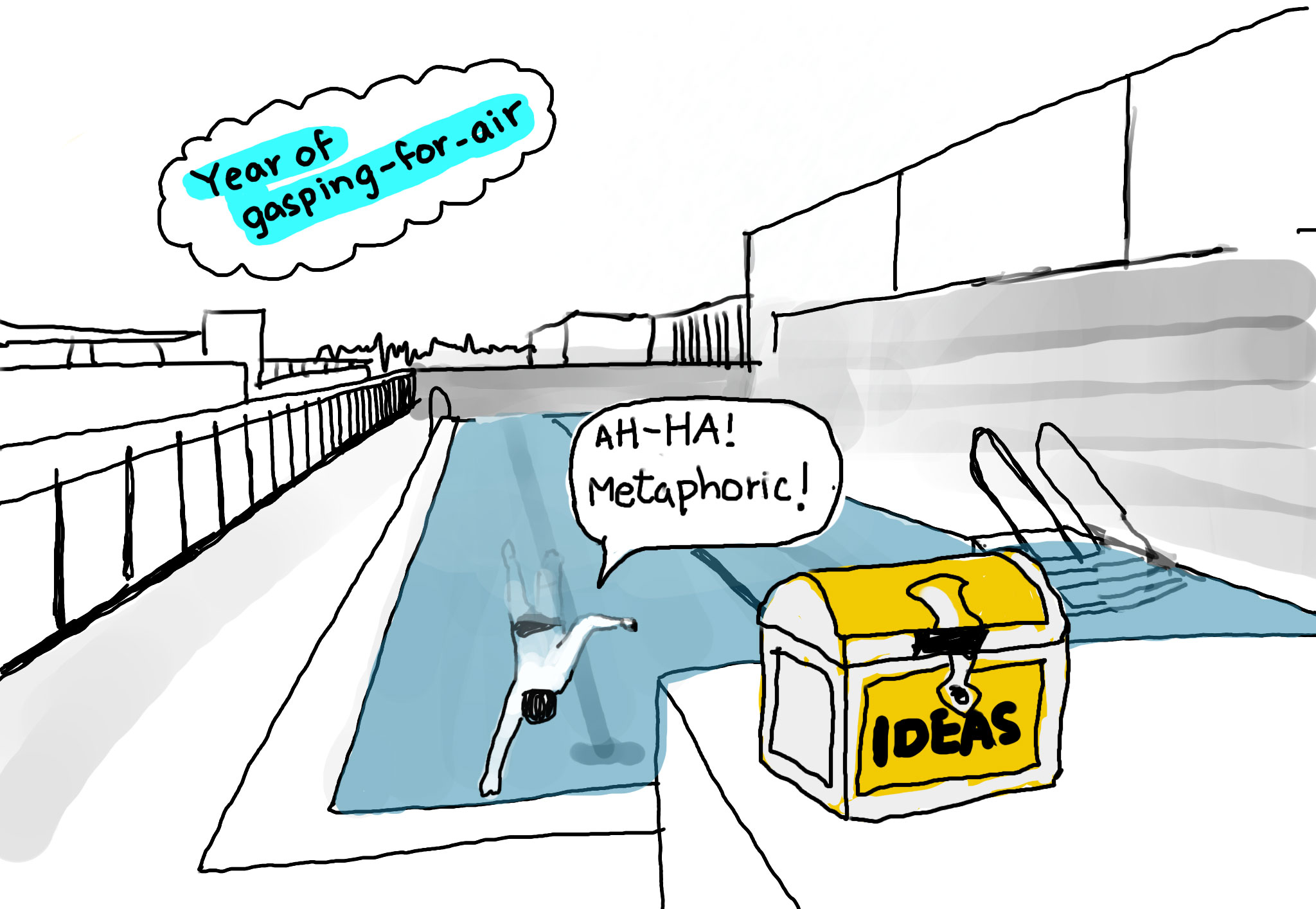
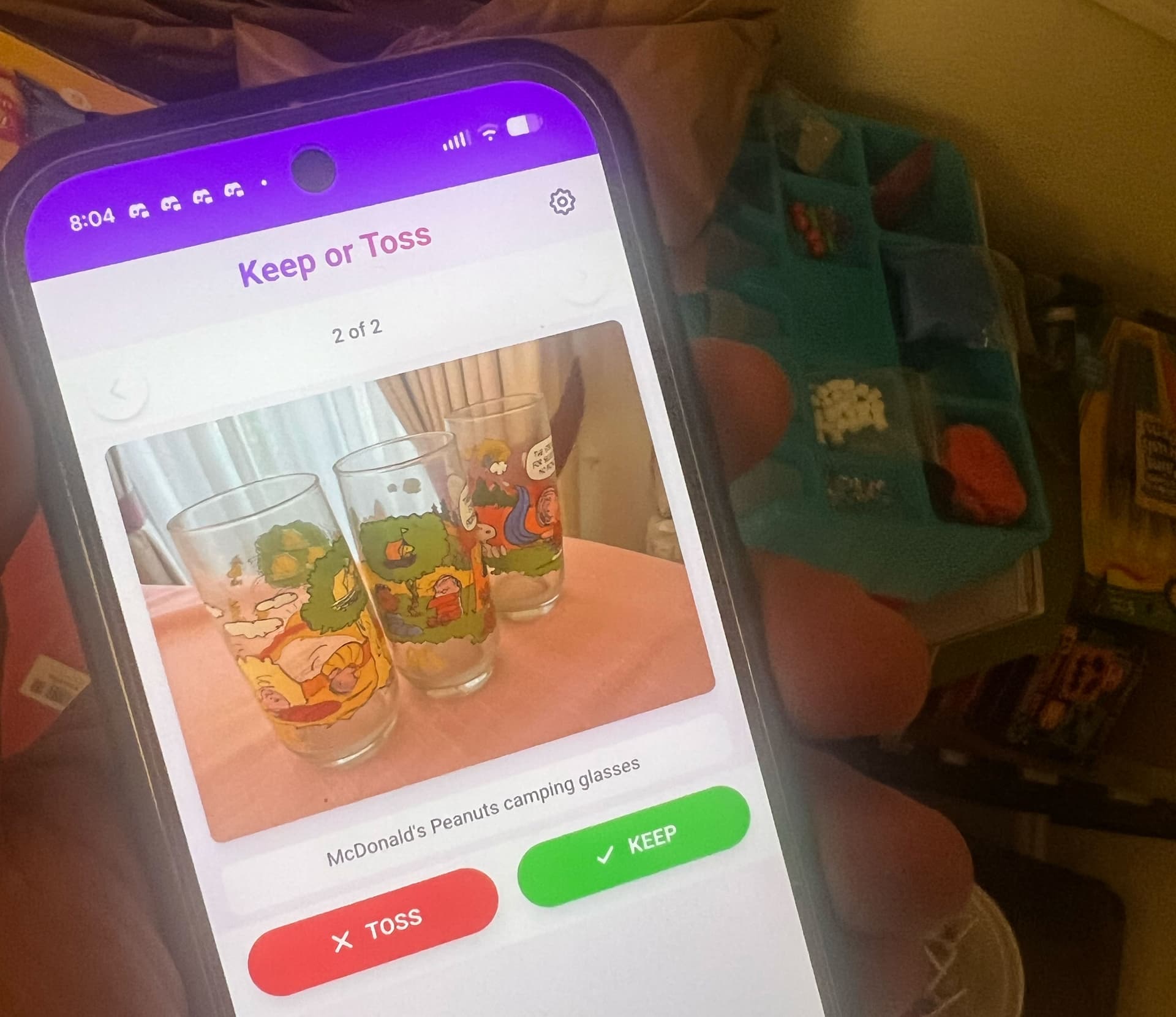
I called it 'Tinder for Stuff.' Total users: 2. Total revenue: $0. In 2020, this would have been a waste of engineering resources. In 2025, it was the only software worth building.
Get notified when we publish new data-driven Catholic content.
The Logistics
Last week I wrote about the weight - kneeling on the carpet, legs numb, paralyzed by a ceramic figure I couldn't place.
I kept going back, but the sheer volume of forty years of life pressing in from every direction was suffocating. Some days I'd get dizzy just standing there.
Then one day I took a picture.
I don't remember why, but looking at the room through my phone screen shifted something. The smell and texture vanished. It was just pixels. I realized I could handle the bottom third of the image. Just that corner. Just those boxes.
My heart shut off. The engineer showed up.
I turned the cleanup into a logistics operation. I put the 3% reward card down at Home Depot and loaded up - stacks of brown cardboard boxes, heavy-duty clear bins, rolls of label tape. I even printed stickers with a numbering system.
I set up a Trello board. Backlog. Permanent Memory. Needs Review. Donate. Discard.
The system worked. The rooms started clearing out.
That's the thing with engineering: the win of solving the problem is its own kind of numbness. Seeing the floorboards reappear felt like control. I thought if I just kept moving, I could outrun the weight of it all.
The Debt
But the "Needs Review" column sat there like a debt.
It was a pile of deferred grief. And every evening, I had to collect on it. I'd hold up my phone - picture of a vase, a stack of letters - and ask: "Keep or toss?"
I watched the light go out of her eyes. I was dragging her back into the room I was trying to clear. Demanding a decision she wasn't ready to make, just to unblock a card.
I couldn't just stand there waiting for a yes or no. I was treating her memories like a blockage in my workflow. She needed to do this on her own time. Maybe at 2 AM. Maybe next week. Without me tapping my foot.
I looked at my computer.
I remembered art school. That professor who made his whole class build Unity apps with ChatGPT. Students who'd never coded were debugging complex scripts.
AI... was... kind of fun.
I've spent my career building for scale - or at least the dream of it. You don't spin up a mobile app for an audience of one. It goes against every instinct you learn as an engineer. And, it simply would cost too much.
But the door was open. I'm fast. And honestly, I was tired of moving boxes.
Fuck it. Let's get back on the computer.
The Architect
Replit and Lovable were already making waves, but I didn't just paste a prompt and hope for the best. I'm too snobby for that.
I started architecting, orchestrating an invisible team that just happened to code as fast as I could think.
Gone was the need to check StackOverflow for parsing URL logic or fiddle with flexbox syntax. Instead, I was directing the flow. Connect this state to that table. Handle this edge case.
In 2015, at the height of mobile dev, this would have been a multi-sprint project. We would have waited days for the designer to hand over assets. We would have spent a week just negotiating the API contract with the backend team.
But the AI handled the boilerplate. It wasn't just a simple swipe screen; it included a full-blown admin dashboard with a complex UI. I called it "Tinder for Stuff." Cute, right?
I shipped in half a day.
Tinder for Stuff
She pulled it up on her phone. She swiped left. She swiped right. She looked up at me, eyes wide.
"This is brilliant," she said. "Other families could use this, too."
I smiled.
The Market of One
That night, the startup brain didn't shut off. It kicked into overdrive.
I sat there thinking about what I had just done. I had built a fully functional, cloud-synced mobile app for two people.
The reality is, cheaper engineering doesn't fix the fact that the App Store is dead. It's been saturated for a decade. We're out of ideas. When was the last time you actually downloaded a new app? Maybe to get a free appetizer and sign up for a loyalty program?
But then I had a thought.
In traditional product thinking, you ignore the random personas. You don't build for the weird, specific use cases because they never amount to sizeable traffic. You ignore the individual because they don't scale.
But with the cost of code at zero, the math changes.
Maybe, just maybe, we are moving toward a place where custom software is so cheap it can be individualized. Where we can finally build for the specific, messy problems that belong to just one person.
I looked at the plain ChatGPT interface, then at the spotless code it spit out in my Finder.
If I can build anything... what should I build next?