I spent months cleaning out my mother-in-law's house. Forty years of accumulation. Every object a decision. It changed how I think about what we leave behind.
Get notified when we publish new data-driven Catholic content.
The Gatekeeper
Last week I wrote about Project Trace. It's still running - the Docker container is up on my server - but I don't use it. My family told me to move on, to look forward. To stop staring into a mirror.
But the seed of that project didn't start with code. It started a year earlier, doing something much harder.
I was in my mother-in-law's house.
The Weight
Forty years of accumulation. Furniture, clothes, collectibles, papers. I wasn't just standing there; I was kneeling on the carpeted floor, my legs numb, staring at a receipt for a collectible she bought in 1998.
You don't realize how heavy grief is until you try to lift a box of it.
I would stay there for hours, my eyes going blank, just holding things. A keychain. A souvenir mug. Elementary school homework she saved from thirty years ago. I tried to numb myself out, to just be a machine processing objects, but you can't.
You freeze. You look at a ceramic figure and you don't know if it was a priceless memory or something she bought at a sale on a whim. She isn't here to tell me.
The hardest part is asking my wife.
Every time I hold up an object and ask, "Do we keep this?", I see the weight land on her. This is her childhood. Her home. So I try to shield her. I err on the side of keeping everything. I pack boxes I know we might never open, just because I can't bear to be the one who throws the wrong thing away.
I'm exhausted, not from the lifting, but from the fear of making a mistake that can never be undone.
The stuff that mattered.
The Erasure
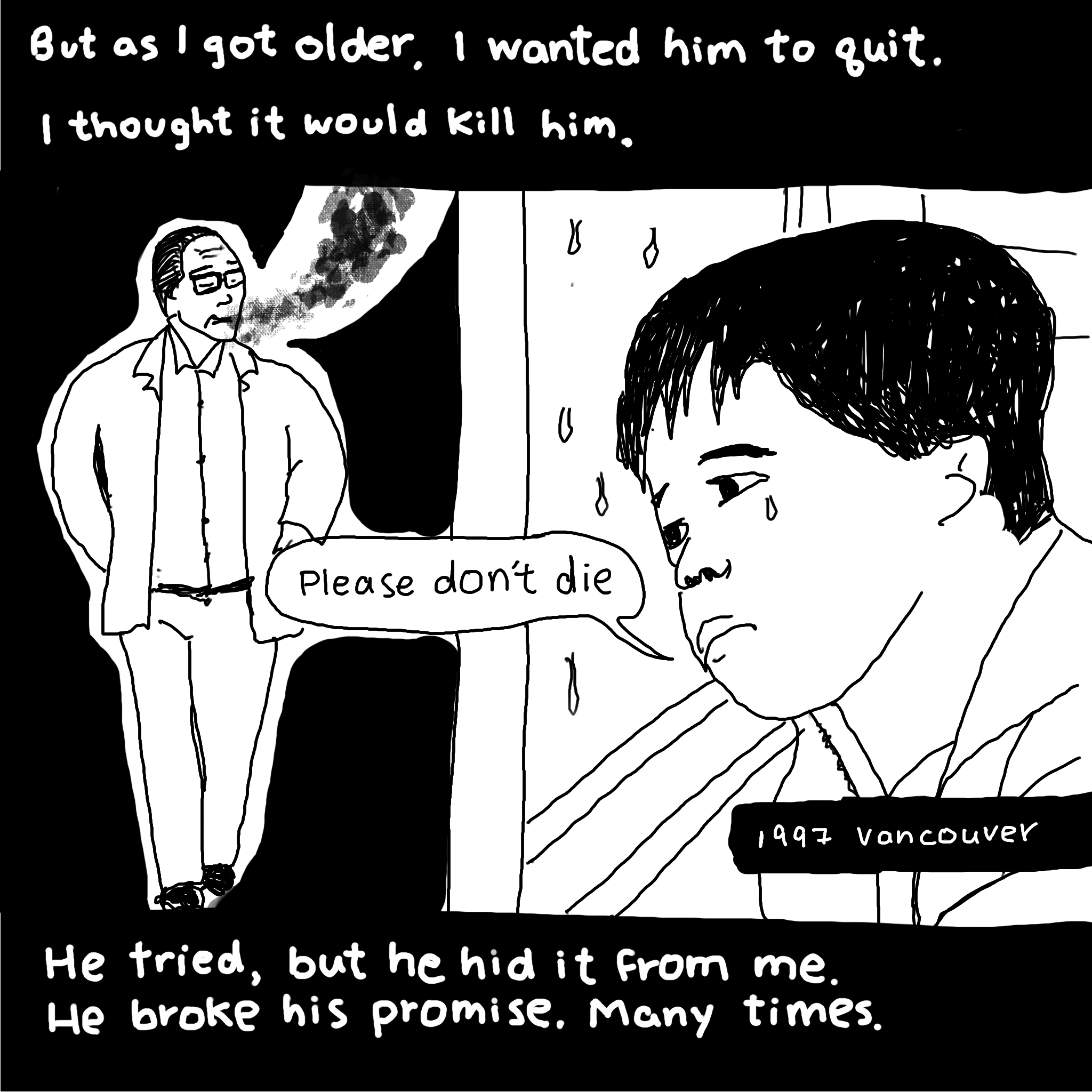
I remember a story a close family member told me. Her own sisters had to clear out a relative's house. They were overwhelmed, so they called a hauling company. The trucks came, and in one afternoon, forty years of life was scraped into a dumpster.
I was told about her sisters crying afterwards. Not because of the furniture. But because of the erasure. The swiftness of it. One minute a life is there. The next, it's just an empty room.
I sat on that floor, clenching my jaw, telling myself: That will not happen here.
So I kept digging.
The Signal
I found boxes of greeting cards written to her. Souvenir mugs from trips. Posters.
She saved everything.
I realized these weren't just things in a box. They were stories. Stories of love.
And then there were the envelopes. Stacks of two-dollar bills and coins. On each envelope, she had written a name. Nieces, nephews. Gifts she planned to give but never got the chance to. The love is still there, sealed in the paper. I put them in a box. I don't know when I'll give them out. Maybe when I'm ready. Maybe when they are.
But the real map of her life wasn't in the boxes. It was tucked into the corners.
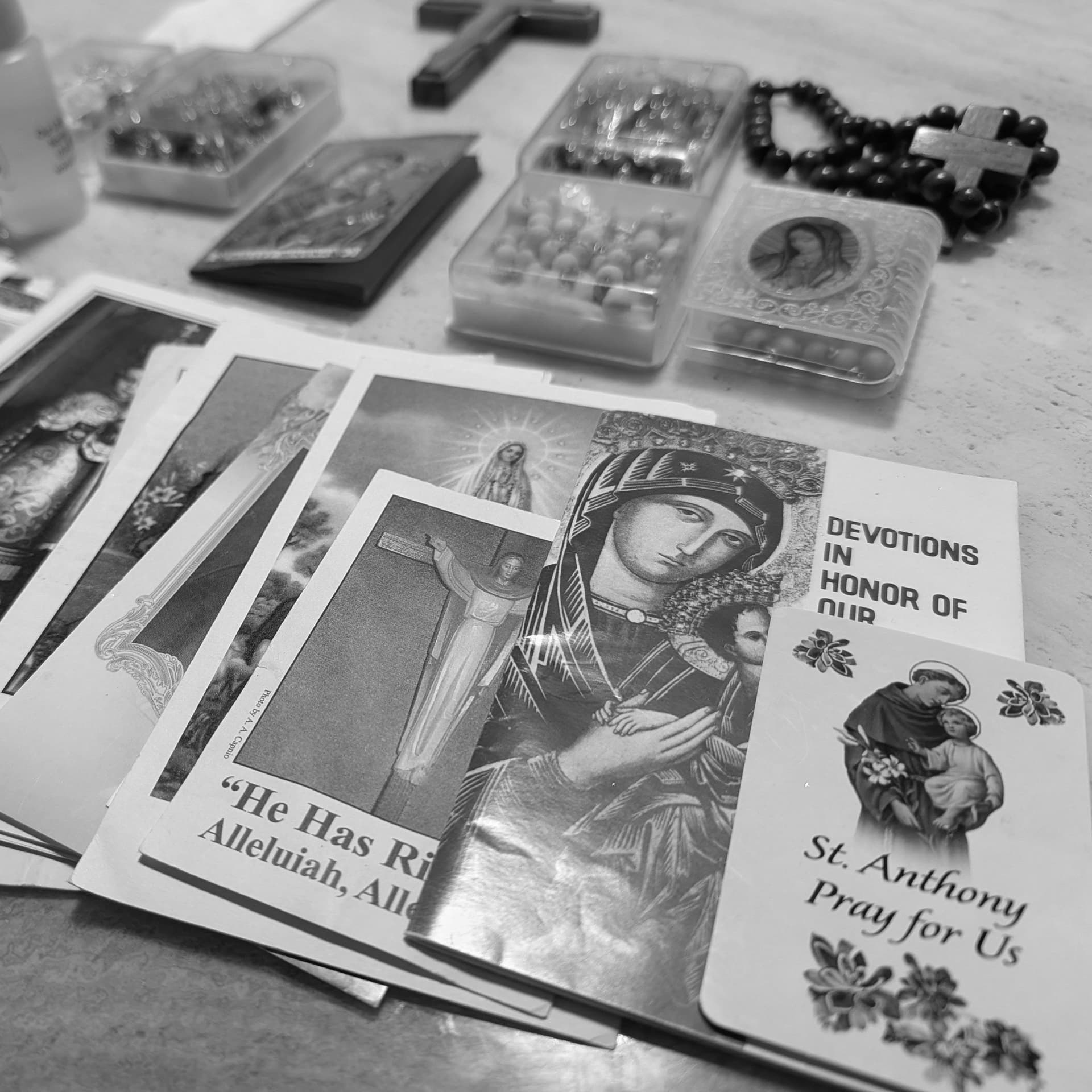
Prayer cards.
They were everywhere. Tucked into books on the shelf, inside desk drawers, slipped behind picture frames.
You can trace the timeline of her life by when she turned to God. The joy, the worry, the gratitude - it's all mapped out across the house. I saved every one. They were worn differently - some creased, some clean - like they had been reached for at different moments.
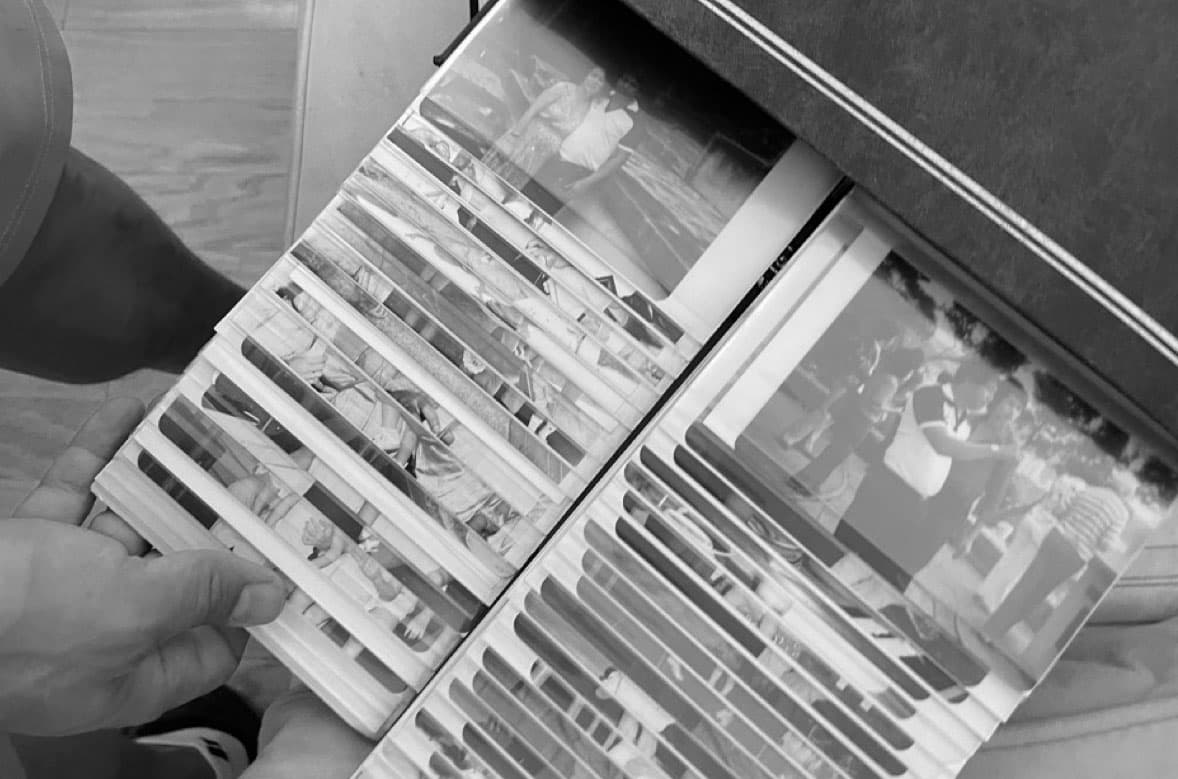
And in the middle of all that - the prayer cards, the mugs, the homework - I found the things she kept of us.
A wedding poster we made. A painting I drew of my wife years ago, hanging quietly on a wall.
I realized she didn't just save things. She saved us.
It wasn't a sudden moment of clarity. It was just a slow, quiet realization while sitting in the dust. The physical house is a story. And preserving it is a crushing responsibility.
Then I thought about her phone.
Where she found peace.
The Digital House
She had an iCloud account. A Google account. Photos, videos, her most important documents - all locked behind a password.
We are all building these digital houses now. My wife has 120,000 photos and videos. Terabytes of memories. And if the physical house is hard to navigate, the digital one is a labyrinth.
I tried to do the "right" thing. I used the official export tools from Apple and Google. And I watched in frustration as the systems we trust with our lives handed me back fragments.
Metadata is messy. Live photos get turned into static JPEGs. The context - the specific "when" and "where" - gets decoupled from the image.
The "Legacy Contact" features? The "Recovery" options? They feel like checkboxes for lawyers. GDPR compliance theater. They aren't built for a grieving family trying to hold onto a signal.
It wasn't a dramatic switch. I didn't stop cleaning to start coding. I just did both. In between packing boxes and making phone calls, I wrote scripts. I fought with APIs just to extract photos of her grandkids without losing the quality. I wanted the raw signal. The uncompressed truth.
Because when we die, we don't leave a garage anymore. We leave a folder.
We leave a hard drive. We leave a cloud account that will eventually stop billing and vanish.
I look at my own data now. The photos of my daughter. The videos of my sons. And I realize that if I go tomorrow, I am leaving them a puzzle they can't solve.
AI will get better. It may one day parse a million photos and infer a story - but it can only work with what survives.
Raw signal. Lossless. That is what we have to protect.
The Keeper
There are a lot of things I want to teach my kids. I want to teach them to be strong. To be smart.
But standing in that house, I realized something else.
There are things I'm not good at. I know that now. I might choke on the sales calls. I might fail at the things the world measures.
But I can do this.
I can be the keeper. I can build a safe place for the story to live. I can make sure that when they look for us, the signal is there.
It's the least I can do.
The Brutal Math of Cleaning Out a Life | Catholic Index