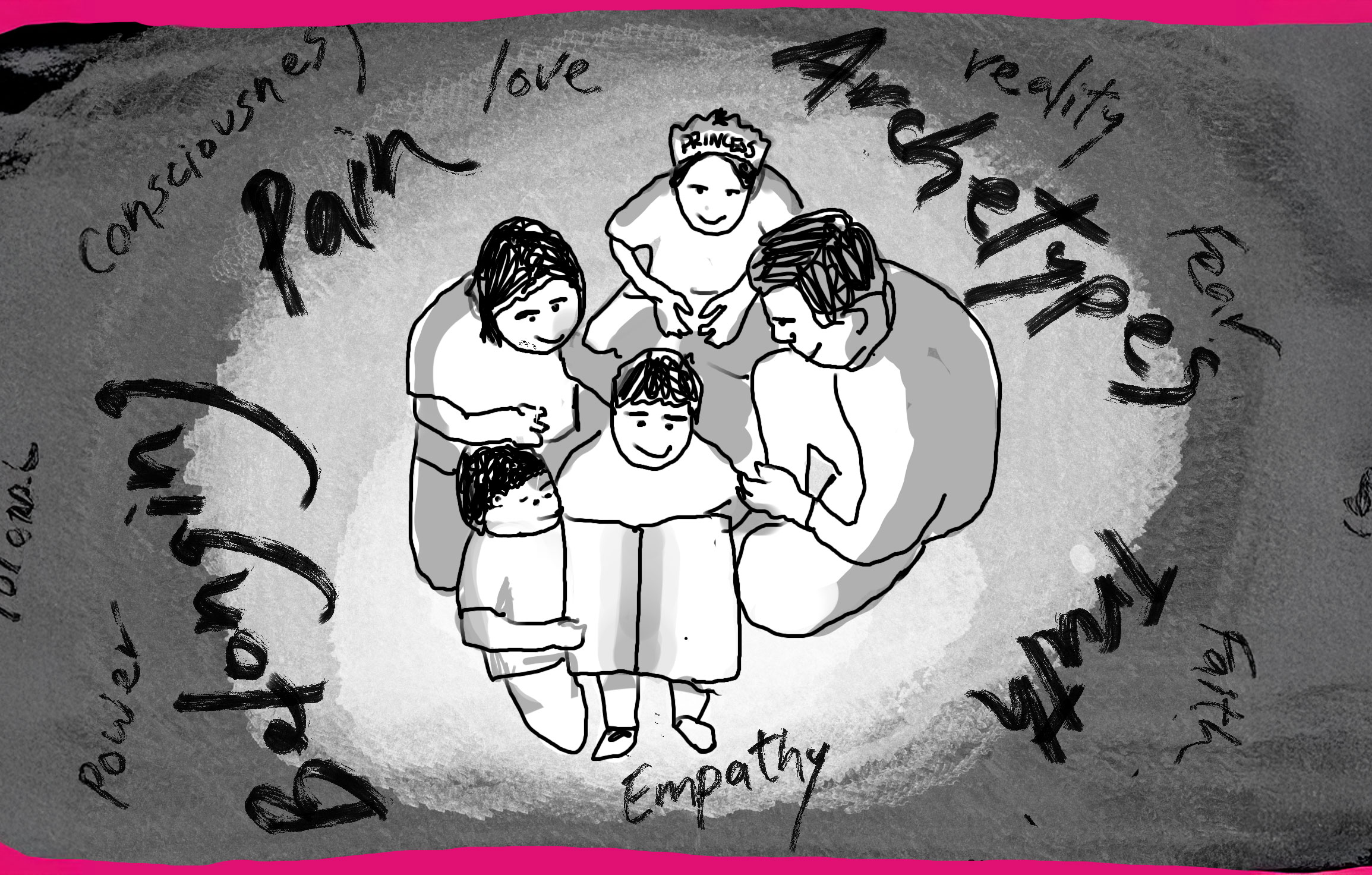
Western psychotherapy isn't neutral. It's philosophically Protestant. So when I had kids, I carried the weight of both worlds. Then I built an app for my family of five.
Get notified when we publish new data-driven Catholic content.
The Burden
Therapy can make me a little blamey.
I figured this out slowly, across years of sessions that never quite fit. The diagnostic model grounds itself in trauma - childhood wounds that predict adult suffering. But when you're Asian American, immigrant parenting gets flattened into pathology. The sacrifice becomes "harsh expectations." The duty becomes "enmeshment."
I don't think my parents were abusive. They're like any other Asian parent. I've seen the bad ones. Mine were pretty good.
What I didn't understand for a long time: western psychotherapy isn't neutral. It's philosophically Protestant. Forgiveness as the path to healing. Shame as inherently pathological. The differentiated self - autonomous, boundaried, separate from family - as the definition of mental health. These aren't universal truths. They're cultural values in clinical clothing.
But when I had kids, I carried the weight of both worlds. The Asian expectation: succeed, don't bring shame. The western expectation: validate every feeling, never use shame. I was terrified of repeating my parents' "mistakes." I was also terrified of raising kids who couldn't handle anything hard.
I didn't know which voice to trust. So I just tried really, really hard.
The Sticker Books
This was the mindfulness era. I read every book. I meditated daily. And I instituted The Sticker Books.
I painted a wall with whiteboard paint - leftover habit from the startup days. I bought a laminator and made oversized stickers with my kids' faces on them. I bought a spinning prize wheel on Amazon and stocked a cabinet with cheap toys - sticky hands, figurines, paper airplane kits.
Every morning we had standup.
I'm not kidding. The kids would gather at the whiteboard wall. We'd review the schedule. Discuss goals. Then they'd chase stickers all day.
They got so excited about the wheel.
I used to work at an EdTech startup that got heat for calming classrooms with digital rewards. You know how child care philosophy is a never ending cultural war. I'm not sure either, but I figured it can't be that bad if it's still around.
But looking back, it wasn't about the stickers.
It was about the love that drove the system. The kids could feel it. They knew I was obsessing over their emotional intelligence, their leadership, their kindness. The sticker books were filled with handwritten notes about what they did well. They were small. They were cute. We were close.
Parenting during those years kept me focused. Whatever confusion I carried about therapy or culture, I knew it was my job to raise them right. The sticker books represented that I was doing it.
The Drift
Then the third kid came. And the drift happened.
It wasn't a sudden stop. It was entropy. The older two got into Minecraft and YouTube. The family dynamic shifted. And honestly, I got tired.
I stopped journaling as much. Stopped strategizing as hard. I carried this humming guilt in the back of my mind - that I wasn't being the best example anymore, that the youngest was getting a depleted version of me.
Less reflection. Less of my arts self. More time on the screen. More doing, less thinking.
I watched myself drift. The builder replaced the reflector.
AI had already taken over my engineering workflow. And honestly, I think better on LCD anyway. Work mode. Ready to execute.
My kids were already living on screens too - Minecraft, Roblox, YouTube. They understood logins and virtual currency.
The App
Silicon Valley engineering for a total addressable market of five.
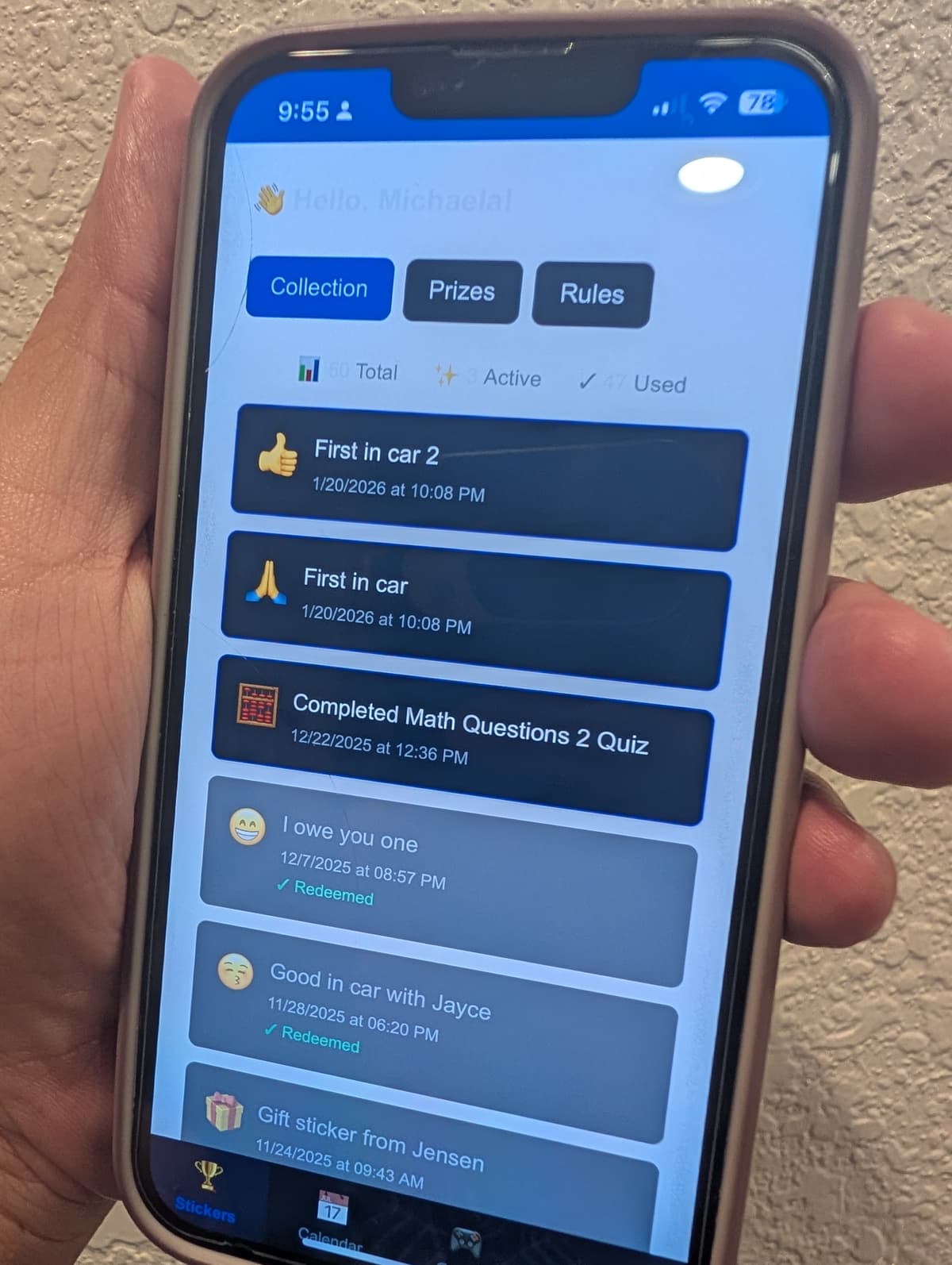
Two nights. Three tabs: Collection, Prizes, Rules.
Collection shows their stickers - total, active, redeemed. Real state management. Firestore subscriptions so everything updates live.
Prizes has real incentives. Three Robux for three stickers. Ten VBucks for twenty. Brawl Stars currency. "Pick the restaurant for tonight" costs five stickers - though we've never redeemed that one because they pick insane places and I override them anyway.
Rules shows daily tasks. Brush teeth. Read twenty minutes. Practice piano. Practice violin. Homework.
I built a quiz system with math problems that get progressively harder. Set up a Claude Code workflow to generate new quizzes and fix bugs. Gathered metrics by watching them use it. Iterated like a real product.
I treated it like the job it is.
The app in action. Note the "Gift sticker from Jensen" - evidence of the underground economy.
The Shadow Economy
Then came the product surprise.
I introduced a "gift sticker" feature - the ability to send a sticker to a sibling. The intent was kindness.
Instead, it became an underground market.
My older son figured out the arbitrage. He started trading stickers to his younger brother in exchange for Roblox items and vague "favors." He was working him, convincing him to trade stickers for things that weren't worth it.
I had to step in as the central bank and regulate. Classic product surprise - users always find behavior you didn't design for.
The Metrics that Count
The app launched in July 2025. Months later, they're still using it daily.
Of course - they live here. They can't leave.
I haven't dealt with millions of DAU in a while. But this retention rivals the best of the App Store. I captured the entire TAM.
The point isn't the code.
Building this gave me something back. Not perfection - just space. The same space journaling used to give me. When you do product work, you empathize with your users. You think about their problems. My users are my kids.
The interface changed. The function didn't.
And here's the thing: these tools - AI, the ability to ship real software solo - aren't mine. Anyone can access them now. Anyone with a little time.