
Next · Wednesday, July 22
Next Mass
Today's Readings5:30PM
Mass
Wednesday, July 22
Wednesday, July 22
Why does another Mass times site exist? Read my story →
Christian Modesty
Holiness becometh thy house, O Lord. – Psalm 93:5
The fundamental reason for the importance of Christian modesty lies in the fact that by baptism the body has become a temple of the Holy Ghost; it has been washed clean of all the filthiness of sin and made into the dwelling place of the thriceholy God. That is why when some Christians at Corinth had begun slipping into various sins of impurity, St. Paul felt compelled to reprimand them harshly and to remind them of their great dignity as baptized members of Christ: Know you not that your bodies are the members of Christ? . . . Or know you not, that your members are the temple of the Holy Ghost, who is in you, whom you have from God; and you are not your own? . . . Glorify and bear God in your body. — 1 Cor 6:15,19-20
Sanctity of soul is impossible where there is a lack of due reverence for the body. In the following chapter of the same letter, the apostle praises the woman who strives to be holy both in body and in spirit. (1 Cor 7:34) Now what does it mean to be holy? In the most basic sense, to be holy means to be "set apart." Set apart for what? For God! A holy/sacred person or thing is one that is set apart for the exclusive service of Almighty God. In the strict and most proper sense, therefore, a church is holy, as is a priest, a chalice, etc. All of these are removed from profane uses and purposes and placed at the service of God alone. In a broader sense, however, the ordinary Christian is also holy in this way. He or she too is "set apart" from among thousands and dedicated to God. After all, not everyone has received the sublime gift of baptism. Not all have been made into a living temple of God.
Holiness becometh thy house, O Lord! The fact that by baptism a Christian is dedicated to God means that he/she must be holy, both in body and in spirit. The Christian is supposed to be set apart. This separateness, this "otherness", should be readily evident in every aspect of a Catholic's life, whether it be in conversation, language, manners, dress, etc. The Catholic should be very easily distinguishable from a non-Christian. We are different from non-Catholics in exactly the same way that a Catholic Church is different from all other buildings. We are different, and therefore we should look different. And yet, in the matter of dress in particular, it happens all too often that Catholics appear little or no different from the general multitude that know not God (see 1 Thess 4:5)!
And, sadly to say, our community is not blameless in this regard. Catholics should be dressed modestly at all times, whether at home or in public. Unfortunately, however, it is sometimes necessary even in church to avert one's eyes so as not to behold plunging necklines and otherwise revealing clothing. This is not good. Such clothing is not at all proper for one who is a member of Christ. Feminine attire especially should not reveal – it should adorn and conceal.
More than 100 years ago, Our Lady of Fatima warned: "Certain fashions will be introduced that will offend Our Lord very much." We Catholics must not adopt these fashions of the world. Heaven knows no fashions, and we are citizens of that eternal fatherland, merely passing through this world on pilgrimage. Let us then be in the world, but not of it.
Modestia cristiana
la santidad es el hermoso adorno de tu casa – Psalm 93:5
La razón fundamental de la importancia de la modestia cristiana está en que, por el bautismo, el cuerpo se ha convertido en templo del Espíritu Santo; ha sido lavado de toda la suciedad del pecado y hecho morada del Dios tres veces santo. Por eso, cuando algunos cristianos en Corinto comenzaron a caer en diversos pecados de impureza, san Pablo se vio obligado a reprenderlos con firmeza y a recordarles la gran dignidad que tenían como miembros bautizados de Cristo: "¿No saben que sus cuerpos son miembros de Cristo?... ¿O no saben que su cuerpo es templo del Espíritu Santo, que está en ustedes, y que han recibido de Dios, y que ya no se pertenecen a sí mismos?... Glorifiquen, pues, y lleven a Dios en su cuerpo." (1 Cor 6,15.19-20)
La santidad del alma es imposible cuando falta el debido respeto al cuerpo. En el capítulo siguiente de la misma carta, el Apóstol alaba a la mujer que se esfuerza por ser santa tanto en el cuerpo como en el espíritu (1 Cor 7,34). Ahora bien, ¿qué significa ser santo? En el sentido más básico, ser santo significa estar "apartado". ¿Apartado para qué? ¡Para Dios! Una persona o cosa santa o sagrada es aquella que está apartada para el servicio exclusivo de Dios Todopoderoso. En el sentido más estricto y propio, por eso, una iglesia es santa, así como un sacerdote, un cáliz, etc. Todos ellos se retiran de usos profanos y se destinan únicamente al servicio de Dios. En un sentido más amplio, sin embargo, el cristiano común también es santo de esta manera. Él o ella también está "apartado" entre miles y dedicado a Dios. Al fin y al cabo, no todos han recibido el sublime don del bautismo. No todos han sido hechos templo vivo de Dios.
"¡La santidad es el adorno de tu casa, Señor!" El hecho de que, por el bautismo, un cristiano esté consagrado a Dios significa que debe ser santo, tanto en el cuerpo como en el espíritu. El cristiano está llamado a ser distinto, apartado. Esta separación, esta "otredad", debería notarse claramente en todos los aspectos de la vida de un católico: en la manera de hablar, en el lenguaje, en las costumbres, en la forma de vestir, etc. El católico debería distinguirse con facilidad de quien no es cristiano. Somos diferentes de los no católicos de la misma manera que una iglesia católica es diferente de cualquier otro edificio. Somos diferentes y, por lo tanto, deberíamos vernos diferentes. Y, sin embargo, especialmente en la forma de vestir, sucede con demasiada frecuencia que los católicos parecen poco o nada distintos de la multitud que no conoce a Dios (cf. 1 Tes 4,5).
Y, tristemente, nuestra comunidad no está libre de culpa en esto. Los católicos deberían vestir con modestia en todo momento, ya sea en casa o en público. Lamentablemente, a veces incluso en la iglesia es necesario apartar la mirada para no ver escotes pronunciados u otra ropa reveladora. Esto no está bien. Ese tipo de vestimenta no es apropiada para quien es miembro de Cristo. La vestimenta femenina, en especial, no debería exhibir: debería adornar y cubrir.
Hace más de 100 años, Nuestra Señora de Fátima advirtió: "Ciertas modas se introducirán que ofenderán mucho a Nuestro Señor." Los católicos no debemos adoptar las modas del mundo. En el cielo no hay modas, y nosotros somos ciudadanos de esa patria eterna, de paso por este mundo como peregrinos. Vivamos, pues, en el mundo, pero no seamos del mundo.
Mass is often celebrated in Latin, with visitors finding it a beautiful and meaningful experience.
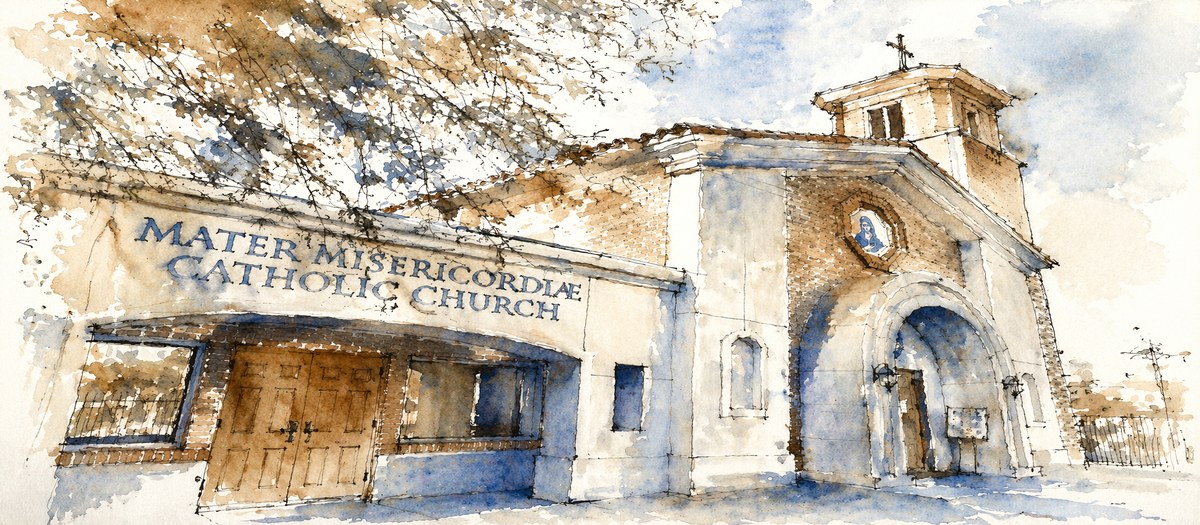
Catholic Index is not affiliated with Mater Misericordiae (Fraternity of St. Peter). Information is sourced from the parish website and public bulletins and may contain errors. Report a correction →
Read sacred intentions from travelers and locals, then join the virtual candle wall to add your own prayer.
0 candles burning now at Catholic Index
Christian Modesty
Holiness becometh thy house, O Lord. – Psalm 93:5
The fundamental reason for the importance of Christian modesty lies in the fact that by baptism the body has become a temple of the Holy Ghost; it has been washed clean of all the filthiness of sin and made into the dwelling place of the thriceholy God. That is why when some Christians at Corinth had begun slipping into various sins of impurity, St. Paul felt compelled to reprimand them harshly and to remind them of their great dignity as baptized members of Christ: Know you not that your bodies are the members of Christ? . . . Or know you not, that your members are the temple of the Holy Ghost, who is in you, whom you have from God; and you are not your own? . . . Glorify and bear God in your body. — 1 Cor 6:15,19-20
Sanctity of soul is impossible where there is a lack of due reverence for the body. In the following chapter of the same letter, the apostle praises the woman who strives to be holy both in body and in spirit. (1 Cor 7:34) Now what does it mean to be holy? In the most basic sense, to be holy means to be "set apart." Set apart for what? For God! A holy/sacred person or thing is one that is set apart for the exclusive service of Almighty God. In the strict and most proper sense, therefore, a church is holy, as is a priest, a chalice, etc. All of these are removed from profane uses and purposes and placed at the service of God alone. In a broader sense, however, the ordinary Christian is also holy in this way. He or she too is "set apart" from among thousands and dedicated to God. After all, not everyone has received the sublime gift of baptism. Not all have been made into a living temple of God.
Holiness becometh thy house, O Lord! The fact that by baptism a Christian is dedicated to God means that he/she must be holy, both in body and in spirit. The Christian is supposed to be set apart. This separateness, this "otherness", should be readily evident in every aspect of a Catholic's life, whether it be in conversation, language, manners, dress, etc. The Catholic should be very easily distinguishable from a non-Christian. We are different from non-Catholics in exactly the same way that a Catholic Church is different from all other buildings. We are different, and therefore we should look different. And yet, in the matter of dress in particular, it happens all too often that Catholics appear little or no different from the general multitude that know not God (see 1 Thess 4:5)!
And, sadly to say, our community is not blameless in this regard. Catholics should be dressed modestly at all times, whether at home or in public. Unfortunately, however, it is sometimes necessary even in church to avert one's eyes so as not to behold plunging necklines and otherwise revealing clothing. This is not good. Such clothing is not at all proper for one who is a member of Christ. Feminine attire especially should not reveal – it should adorn and conceal.
More than 100 years ago, Our Lady of Fatima warned: "Certain fashions will be introduced that will offend Our Lord very much." We Catholics must not adopt these fashions of the world. Heaven knows no fashions, and we are citizens of that eternal fatherland, merely passing through this world on pilgrimage. Let us then be in the world, but not of it.
Modestia cristiana
la santidad es el hermoso adorno de tu casa – Psalm 93:5
La razón fundamental de la importancia de la modestia cristiana está en que, por el bautismo, el cuerpo se ha convertido en templo del Espíritu Santo; ha sido lavado de toda la suciedad del pecado y hecho morada del Dios tres veces santo. Por eso, cuando algunos cristianos en Corinto comenzaron a caer en diversos pecados de impureza, san Pablo se vio obligado a reprenderlos con firmeza y a recordarles la gran dignidad que tenían como miembros bautizados de Cristo: "¿No saben que sus cuerpos son miembros de Cristo?... ¿O no saben que su cuerpo es templo del Espíritu Santo, que está en ustedes, y que han recibido de Dios, y que ya no se pertenecen a sí mismos?... Glorifiquen, pues, y lleven a Dios en su cuerpo." (1 Cor 6,15.19-20)
La santidad del alma es imposible cuando falta el debido respeto al cuerpo. En el capítulo siguiente de la misma carta, el Apóstol alaba a la mujer que se esfuerza por ser santa tanto en el cuerpo como en el espíritu (1 Cor 7,34). Ahora bien, ¿qué significa ser santo? En el sentido más básico, ser santo significa estar "apartado". ¿Apartado para qué? ¡Para Dios! Una persona o cosa santa o sagrada es aquella que está apartada para el servicio exclusivo de Dios Todopoderoso. En el sentido más estricto y propio, por eso, una iglesia es santa, así como un sacerdote, un cáliz, etc. Todos ellos se retiran de usos profanos y se destinan únicamente al servicio de Dios. En un sentido más amplio, sin embargo, el cristiano común también es santo de esta manera. Él o ella también está "apartado" entre miles y dedicado a Dios. Al fin y al cabo, no todos han recibido el sublime don del bautismo. No todos han sido hechos templo vivo de Dios.
"¡La santidad es el adorno de tu casa, Señor!" El hecho de que, por el bautismo, un cristiano esté consagrado a Dios significa que debe ser santo, tanto en el cuerpo como en el espíritu. El cristiano está llamado a ser distinto, apartado. Esta separación, esta "otredad", debería notarse claramente en todos los aspectos de la vida de un católico: en la manera de hablar, en el lenguaje, en las costumbres, en la forma de vestir, etc. El católico debería distinguirse con facilidad de quien no es cristiano. Somos diferentes de los no católicos de la misma manera que una iglesia católica es diferente de cualquier otro edificio. Somos diferentes y, por lo tanto, deberíamos vernos diferentes. Y, sin embargo, especialmente en la forma de vestir, sucede con demasiada frecuencia que los católicos parecen poco o nada distintos de la multitud que no conoce a Dios (cf. 1 Tes 4,5).
Y, tristemente, nuestra comunidad no está libre de culpa en esto. Los católicos deberían vestir con modestia en todo momento, ya sea en casa o en público. Lamentablemente, a veces incluso en la iglesia es necesario apartar la mirada para no ver escotes pronunciados u otra ropa reveladora. Esto no está bien. Ese tipo de vestimenta no es apropiada para quien es miembro de Cristo. La vestimenta femenina, en especial, no debería exhibir: debería adornar y cubrir.
Hace más de 100 años, Nuestra Señora de Fátima advirtió: "Ciertas modas se introducirán que ofenderán mucho a Nuestro Señor." Los católicos no debemos adoptar las modas del mundo. En el cielo no hay modas, y nosotros somos ciudadanos de esa patria eterna, de paso por este mundo como peregrinos. Vivamos, pues, en el mundo, pero no seamos del mundo.
Mass is often celebrated in Latin, with visitors finding it a beautiful and meaningful experience.
Catholic Index is not affiliated with Mater Misericordiae (Fraternity of St. Peter). Information is sourced from the parish website and public bulletins and may contain errors. Report a correction →
Read sacred intentions from travelers and locals, then join the virtual candle wall to add your own prayer.
0 candles burning now at Catholic Index